

An actinic keratosis is a small rough, scaly patch that forms on skin damaged by years of ultraviolet light. It matters because it is a precancer: a proportion of these patches, left alone, can turn into squamous cell carcinoma. Most are treated in the office in minutes. Here is what they look and feel like, why dermatologists treat them rather than watch them, and what the options are.
What an Actinic Keratosis Actually Feels Like
Bakersfield Dermatology describes actinic keratoses as small, rough, scaly patches that are red, pink or skin-coloured, usually on the face, neck, arms and hands — the places that catch the most sun. The texture is the giveaway. Patients often describe a dry, gritty spot that catches on a towel or a razor and keeps coming back in exactly the same place.
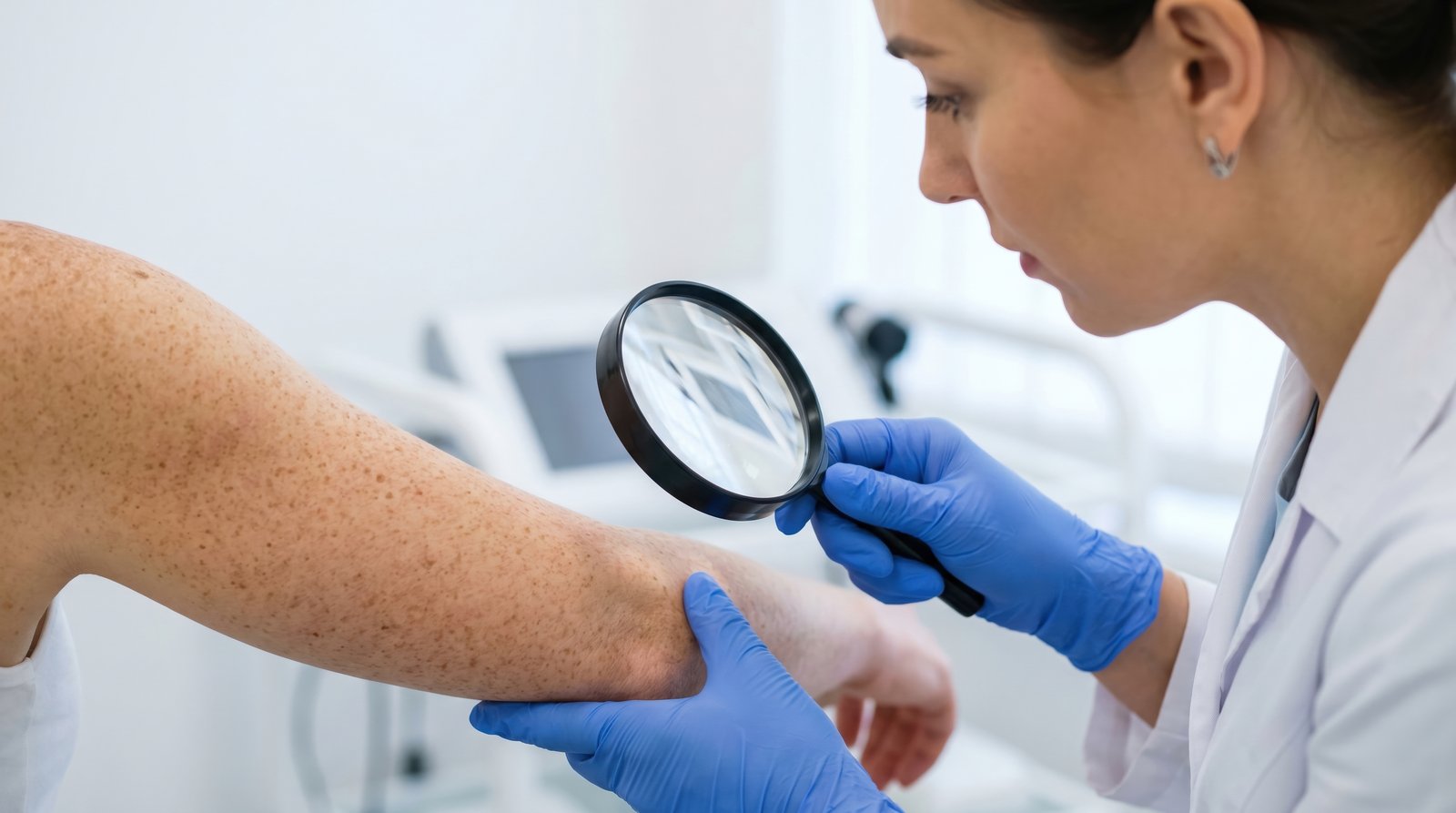
The Skin Cancer Foundation makes the same point more bluntly: these lesions are often easier to feel than to see. That is why a skin check involves a dermatologist running a gloved hand over sun-exposed skin as well as looking at it, and why some actinic keratoses are found during a routine examination rather than because someone noticed them.
Where they turn up: the face, lips, ears, scalp, shoulders, neck, and the backs of the hands and forearms. Thinning hair changes the picture — a scalp that was covered for decades starts accumulating exposure once it is not.
Why "Precancer" Is the Right Word
Actinic keratosis is the most common precancer that forms on skin damaged by chronic UV exposure, and the Skin Cancer Foundation estimates 58 million Americans have one or more. The number that matters clinically is smaller and easy to misread in both directions: just 5 to 10 percent of actinic keratoses turn into skin cancer — but the vast majority of squamous cell carcinomas start off as one.
So the risk from any single patch is low. The reason dermatologists treat them anyway is that there is no reliable way to look at a group of actinic keratoses and say which one is the 5 percent. Treating them is quick; treating a squamous cell carcinoma that grew from one is not.
Who Gets Them
The underlying cause is cumulative UV damage, from the sun or from indoor tanning. Risk rises with fair skin, light-coloured eyes or hair, a history of sunburns, outdoor work, advancing age, and a weakened immune system. Certain medications also increase risk — the practice's own page notes that some medical conditions and medications raise the chance of developing them.
In Kern County that adds up faster than people expect. Sun exposure that happened in your twenties and thirties is still counted decades later; actinic keratoses are the receipt.
How They Are Treated
Treatment is chosen around how many lesions there are and where they sit. Bakersfield Dermatology lists these options on its actinic keratosis page:
- Topical creams and gels: medication applied to the skin over a course of days or weeks. Some work by causing the treated skin to peel; others are designed to destroy the abnormal cells. Useful when a whole area is involved rather than one spot.
- Cryotherapy: freezing the lesion with liquid nitrogen so the patch blisters and falls away. Quick, done in the office, and the usual choice for a small number of discrete lesions. It is also offered as cryosurgery for some skin cancers.
- Photodynamic therapy: a light-sensitising agent is applied and then activated with a specific light source. The practice lists actinic keratosis among its main uses, alongside psoriasis and certain early skin cancers.
What to expect afterwards, and the limitation worth knowing: treated skin is usually red, crusted or peeling for a stretch of days to weeks depending on the method, and that reaction is part of how the treatments work rather than a sign something went wrong. None of them prevents new lesions. Actinic keratoses reflect damage across a whole region of skin, so new patches commonly appear near the treated ones, and follow-up checks are part of the plan.
Cutting Down the Next Round
Because the driver is accumulated UV exposure, the useful response is unglamorous and ongoing: daily broad-spectrum sunscreen, a hat that actually shades the ears and the back of the neck, shade in the middle of the day, and no indoor tanning. None of that undoes existing damage. It changes what gets added.
It is also worth pairing with a self-check habit — a skin self-exam every month or so, so you notice a spot that is changing between appointments rather than at one.
Have a Rough Patch Looked At
Bakersfield Dermatology & Skin Cancer Medical Group examines and treats actinic keratosis at 4100 Empire Drive, Suite 120, Bakersfield, CA 93301, with additional offices in Porter Ranch, Valencia and Palmdale. If you have a scaly spot that keeps returning, call 866.903.3376 or request an appointment.
Frequently Asked Questions
Will an actinic keratosis go away on its own?
Some do fade, particularly if the skin is protected from further sun. Others persist or come back. Because there is no way to tell by looking which ones will change, dermatologists generally treat them rather than watch them.
How do I tell an actinic keratosis from a dry patch?
You often cannot, which is the point of having it examined. The Skin Cancer Foundation notes actinic keratoses are often easier to feel than to see — a rough, gritty spot that keeps returning in the same place after moisturiser is worth showing a dermatologist.
Does treating one mean I will not get more?
No. Actinic keratoses reflect years of accumulated sun exposure across a whole area of skin, so new ones commonly appear nearby. Ongoing sun protection and regular skin checks are part of the plan, not an afterthought.
Is the treatment a surgical procedure?
Usually not. Bakersfield Dermatology lists topical creams and gels, cryotherapy with liquid nitrogen, and photodynamic therapy among the options. Which one suits you depends on how many lesions there are and where they sit.
Sources: The Skin Cancer Foundation, Actinic Keratosis (updated May 2026) — precancer definition, 58 million Americans affected, the 5–10 percent progression figure, "easier to feel than see", locations and risk factors; and Bakersfield Dermatology's own Actinic Keratosis and Photodynamic Therapy pages — symptoms, causes and the treatment options offered here.