



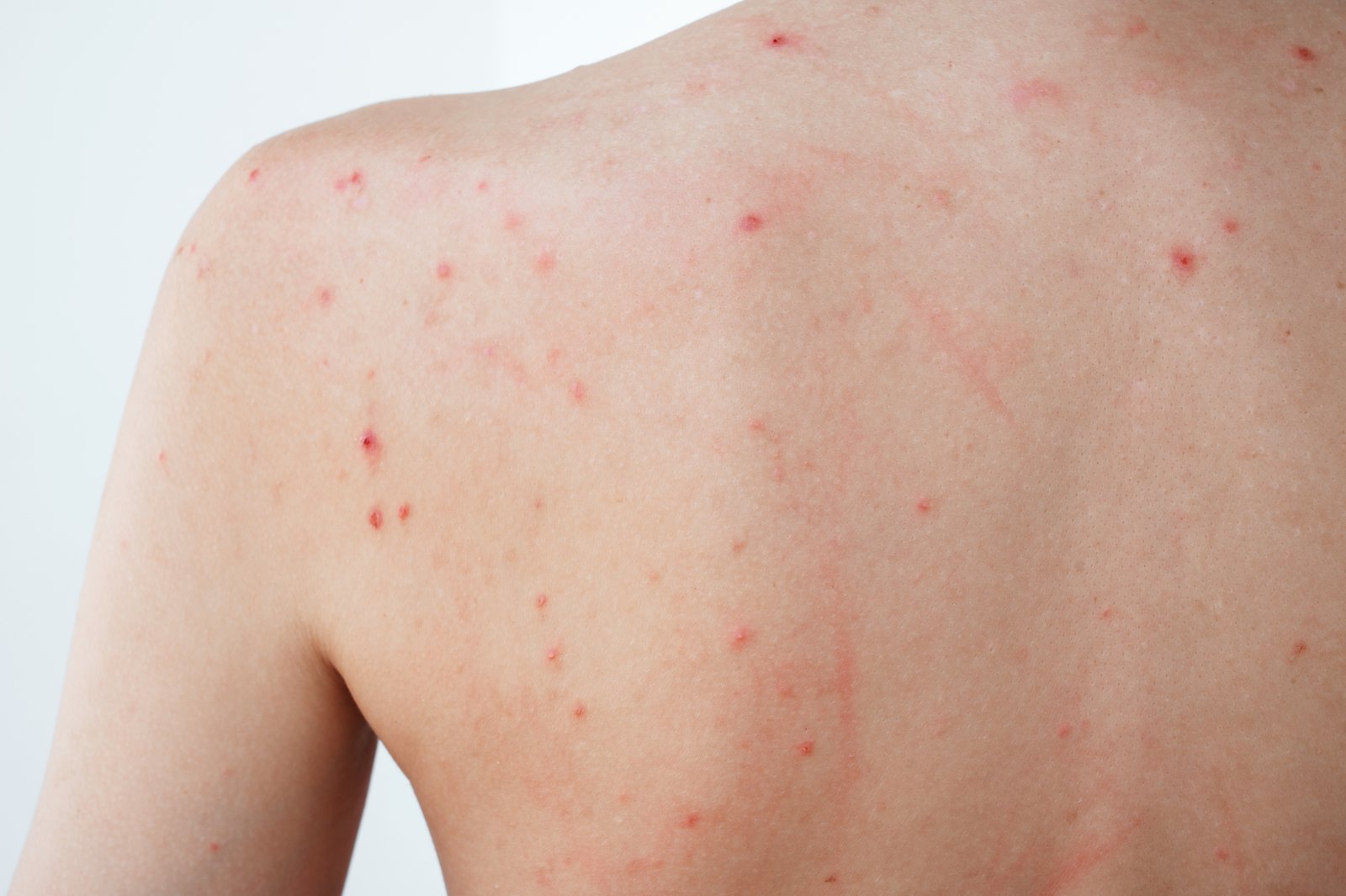
Acne on the back, chest and shoulders is the same condition as facial acne, but it is a different practical problem: the skin is thicker, half of it is out of reach, and it spends the day under fabric, straps and sweat. The habits that help are specific, and a few of the things people reach for first actively make it worse.
Why the Body Is Different
The mechanism is identical. The practice's acne page describes it: the gland produces too much sebum, which builds up in the follicle and traps dead skin cells and bacteria, forming a plug that blocks the pore; bacteria multiply in the clogged pore and cause inflammation.
What differs is everything around it. Friction from backpacks, sports gear, bra straps and tight clothing irritates skin — the American Academy of Dermatology notes directly that anything that rubs against your back can irritate your skin, causing back acne to flare. Sweat sits trapped against the skin instead of evaporating. And body washes, hair conditioner rinsing down your back, and rich body creams all get a chance to clog pores that facial products never touch.
The Habits That Change It
The AAD's list for clearing back acne is practical rather than clinical:
- Wear loose workout clothes made of cotton or a sweat-wicking fabric, and wash them after each use.
- Shower and change as soon as possible after working out or sweating. If you cannot shower straight away, an oil-free cleansing wipe over sweaty skin is better than nothing.
- Be gentle. Scrubbing skin with acne "actually worsens acne" — and antibacterial soaps, astringents and scrubbing tools make it worse too.
- Check your products. Anything with oil, including cocoa butter and shea butter, can clog pores on the back and chest. Look for "non-comedogenic", "non-acnegenic" or "oil-free".
- Reduce friction where you can — a looser strap, a different bag, a break from the gear that sits on the flare.
- Do not pick or pop, even where no one can see it.
- Use sunscreen that is non-comedogenic, SPF 30, broad-spectrum and water resistant on exposed shoulders and back.
The one people get wrong: scrubbing. Back skin feels tougher, so the instinct is to attack it with a brush or an exfoliating tool. That inflames acne rather than clearing it, and inflamed acne is the kind that scars.
What to Put on It
The AAD's over-the-counter guidance for the back is specific. Benzoyl peroxide works best if left on the back for two to five minutes before rinsing — a step most people skip. It recommends 5.3% strength to limit irritation, with 10% as the strongest over-the-counter option. A retinoid used alongside it can improve results; adapalene 0.1% gel applied daily after showering or before bed is the example given.
Two practical notes: benzoyl peroxide bleaches fabric, so old towels and dark sheets will suffer, and reaching the middle of your own back is genuinely difficult — a long-handled applicator is worth having.
How Long to Give It
The AAD's timeline is the useful expectation-setter: results typically appear in six to eight weeks, with complete clearing taking three or four months. If six to eight weeks of consistent treatment has produced nothing, that is the moment to stop experimenting and get an appointment.
When to See a Dermatologist Sooner
The AAD draws the line clearly. You may be able to clear your back yourself if you have a mix of whiteheads, blackheads and pimples with nothing painful or deep. If you have severe or deep, painful acne on your chest or back, it recommends seeing a professional.
That distinction matters because deep acne is the type that scars, and scars are much harder to treat than the acne that caused them. The practice describes nodules as large, hard lumps that form deep under the skin and can last weeks or months and leave scars, and cysts as deep lumps containing pus and blood — both are reasons to come in rather than wait out another product.
Prescription options reach body acne that over-the-counter treatment does not. The AAD notes that for women with stubborn hormonal acne, spironolactone can treat acne on the face, chest and back — the practice has written about that option before. Other treatments offered here, including AviClear and blue light therapy, are also discussed at a consultation.
Get Body Acne Assessed in Bakersfield
Bakersfield Dermatology & Skin Cancer Medical Group treats acne on the face and body at 4100 Empire Drive, Suite 120, Bakersfield, CA 93301, with additional offices in Porter Ranch, Valencia and Palmdale. If your back or chest acne is deep, uncomfortable or has not improved, call 866.903.3376 or request an appointment.
Frequently Asked Questions
How long before I see a difference?
The American Academy of Dermatology says results typically appear in six to eight weeks, with complete clearing taking three or four months. If nothing has improved after six to eight weeks of consistent treatment, that is the point to see a dermatologist.
Does scrubbing help clear it faster?
No — it makes it worse. The AAD states plainly that scrubbing skin with acne worsens acne, and advises against antibacterial soaps, astringents and scrubbing tools. Gentle washing plus the right treatment beats abrasion.
Why does it flare after the gym?
Sweat trapped against the skin under tight clothing, plus friction from straps and bags, irritates skin and drives flares. The AAD recommends loose cotton or sweat-wicking workout clothes, washing them after each use, and showering and changing as soon as possible afterwards.
When should I stop treating it myself?
If your body acne is deep or painful rather than a mix of whiteheads, blackheads and surface pimples, the AAD recommends seeing a dermatologist rather than treating it at home — deep acne is the type most likely to scar.
Sources: American Academy of Dermatology, Back Acne: How to See Clearer Skin — the seven habits, the benzoyl peroxide two-to-five-minute contact time and 5.3%/10% strengths, adapalene 0.1% gel, the friction and scrubbing warnings, non-comedogenic product guidance, the six-to-eight-week and three-to-four-month timelines, the home-treatment versus dermatologist distinction, and spironolactone for stubborn hormonal acne; and Bakersfield Dermatology's own Acne page — how acne forms and the descriptions of nodules and cysts.