



Basal cell carcinoma is the most common skin cancer, and when it is found early it is highly treatable. There is no single treatment — the right one depends on how large the tumor is, how deep it goes, where it sits on the body, and whether it has been treated before. Here is what each option involves and where each one fits.
How the Diagnosis Is Made First
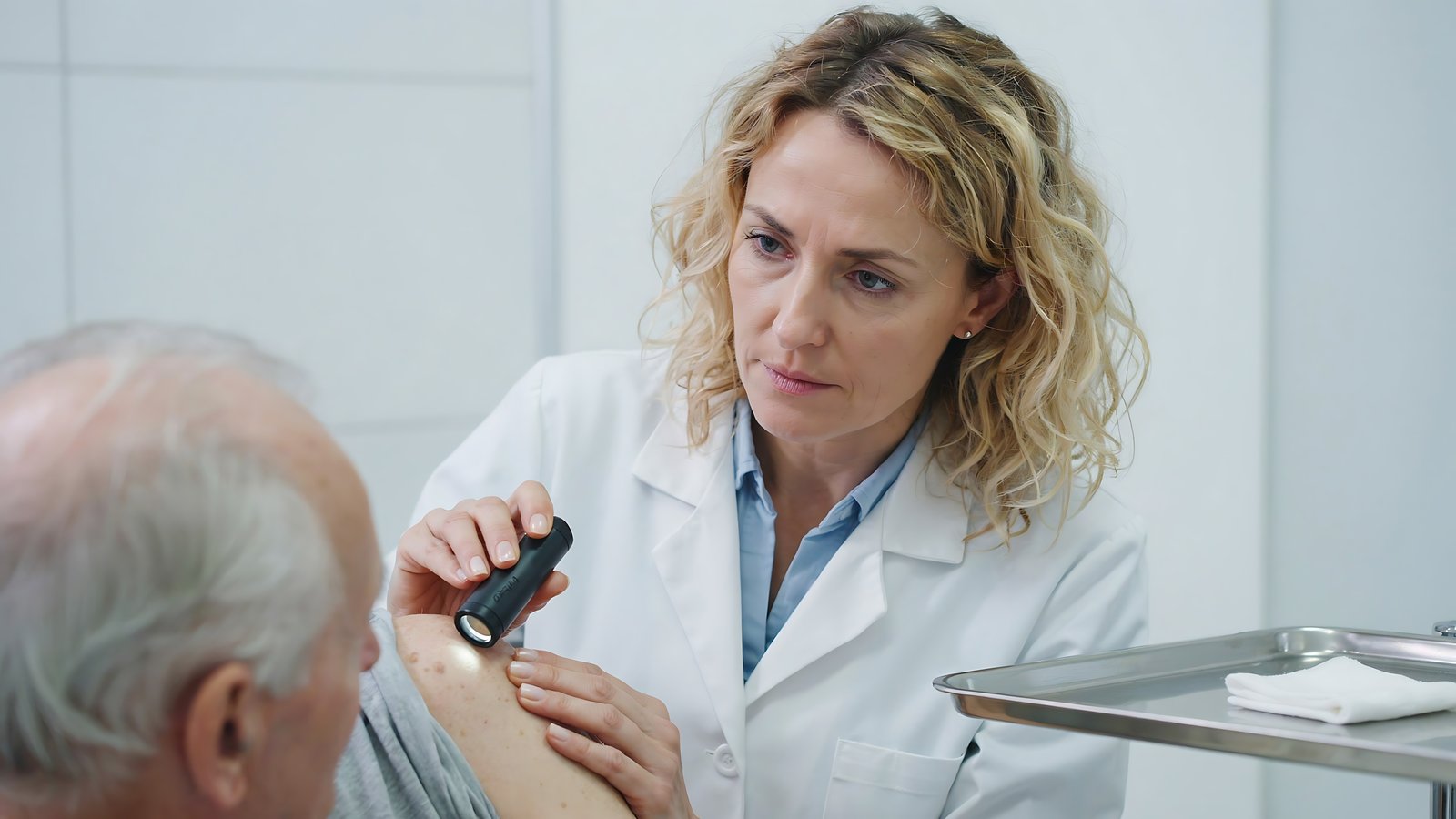
Treatment starts with certainty. A dermatologist examines the skin, and when basal cell carcinoma is suspected, a skin biopsy confirms whether cancerous cells are present. What that biopsy shows — the type of tumor, and how deep it reaches — is what narrows the treatment list that follows.
The Treatments, Side by Side
| Treatment | Typically used for | Reported cure rate |
|---|---|---|
| Mohs surgery | Ears, eyelids, nose; deep or recurrent tumors; skin treated with radiation | Up to 99% on tumors treated for the first time |
| Excisional surgery | Most early basal cell carcinomas | Above 95% in most body areas |
| Curettage and electrodesiccation | Small, low-risk tumors on certain areas | Close to 95% |
| Cryosurgery | Small, non-aggressive tumors when better options are not possible | Between 85% and 90% |
| Radiation therapy | People who cannot have surgery; sometimes added after surgery | About 90% |
| Topical medication | Superficial tumors in the outermost skin layer | Between 80% and 90% |
Cure rates as reported by The Skin Cancer Foundation; the situations each treatment suits follow the American Academy of Dermatology.
Surgical Options
Excisional surgery removes the entire tumor along with a margin of surrounding tissue, which is sent to an off-site lab. It is the most common treatment, and many early basal cell carcinomas are cured this way.
Mohs micrographic surgery removes the tumor one thin layer at a time, checking each layer under a microscope during the same visit and continuing until no cancer cells remain. The AAD describes it as having the highest cure rate of all skin cancer treatments. It is the choice where sparing healthy tissue matters most — the ears, eyelids and nose — and for tumors that are deep, sit near scars, or have returned after earlier treatment.
Curettage and electrodesiccation scrapes the tumor away with a curette, then uses heat to destroy the remaining cancer cells. It suits small, low-risk tumors in a person with a healthy immune system.
Non-Surgical Options
Topical medication — prescription imiquimod or fluorouracil — is applied at home for several weeks. It is used for superficial tumors confined to the outermost layer of skin, and for people who cannot have surgery. The cure rate is lower than surgery.
Photodynamic therapy applies a light-sensitizing medication, waits while it is absorbed, then activates it with a special light. It is used for low-risk tumors, with a lower cure rate than excision or Mohs.
Cryosurgery freezes the tumor with liquid nitrogen. The AAD is direct that it is used mainly when someone cannot have a more effective treatment.
Radiation therapy uses repeated treatments over weeks. It is an option for people who cannot have surgery, or as additional treatment afterward.
For advanced disease that has grown deep, spread, or returned after surgery and radiation, there are FDA-approved medications including sonidegib, vismodegib and cemiplimab.
The Trade-Off Worth Understanding
There is one difference between these approaches that rarely gets explained. As The Skin Cancer Foundation puts it, radiation, cryosurgery and topical medications "all have one significant drawback in common — no tissue is examined under the microscope, so there is no way to determine how completely the tumor was removed."
That is the real trade-off behind the cure-rate numbers, and it is worth asking your dermatologist about directly when a treatment is proposed.
After Treatment
Care does not stop when the tumor is gone. The AAD notes that a full-body skin exam is part of care after a skin cancer diagnosis, because finding one raises the odds of finding another. Scars also take time — more than a year for a scar to go from newly formed to mature.
Skin Cancer Care in Bakersfield
Bakersfield Dermatology & Skin Cancer Medical Group diagnoses and treats basal cell carcinoma at 4100 Empire Drive, Suite 120, Bakersfield, CA 93301. If you have a spot that bleeds, will not heal, or has changed, call 866.903.3376 or request an appointment to have it examined. Which treatment fits your case is a decision to make with your dermatologist after a biopsy — not from an article.
Frequently Asked Questions
Is basal cell carcinoma dangerous?
Basal cell carcinoma usually grows slowly and rarely spreads to other parts of the body, but it can keep growing locally and damage nearby tissue. That is why early detection and treatment matter, and why a spot that will not heal should be examined.
Why would a dermatologist recommend Mohs surgery over a standard excision?
The American Academy of Dermatology notes Mohs is used for tumors in areas with little tissue beneath the skin such as the ears, eyelids and nose, for skin previously treated with radiation, near scars, for tumors likely to grow deep, and for cancer that has returned after earlier treatment.
Are there treatments that avoid surgery?
Yes. Topical prescription medication, photodynamic therapy, cryosurgery and radiation are all used, generally for low-risk or superficial tumors or when someone cannot have surgery. The Skin Cancer Foundation notes these methods do not examine tissue under a microscope, so there is no way to confirm how completely the tumor was removed.
What happens after treatment is finished?
The AAD notes a full-body skin exam is part of care after a diagnosis, because having one skin cancer raises the chance of finding another. Scars also keep changing — it can take more than a year for a scar to go from newly formed to mature.
Sources: American Academy of Dermatology, Basal cell carcinoma: Diagnosis and treatment (updated 1 October 2025) — treatment list, which situations each suits, follow-up skin exam; The Skin Cancer Foundation, Basal Cell Carcinoma Treatment Options (updated April 2026, medically reviewed by Julie K. Karen, MD and Ronald L. Moy, MD) — cure rates and the microscopic-examination trade-off; and Bakersfield Dermatology's own basal cell carcinoma page — appearance, biopsy and the treatments offered here.