


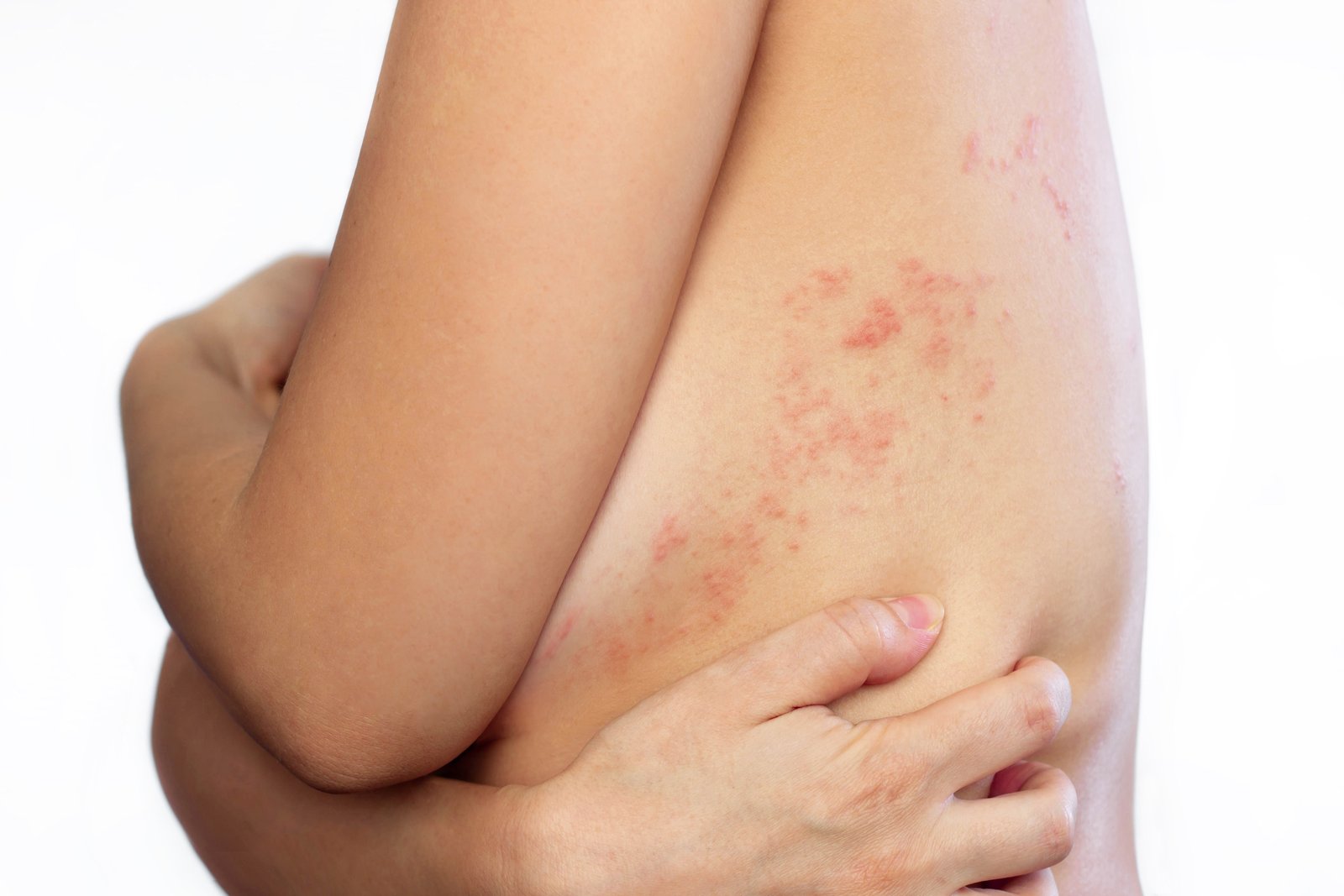
Shingles often starts before there is anything to see. Burning, tingling or itching in a band on one side of the body commonly comes first, with the blistering rash following days later. That gap matters, because antiviral medication works best when it is started as soon as the rash appears. Here is what the early signs look like and what a dermatologist can do about them.
What Shingles Is
Shingles, or herpes zoster, is caused by the varicella-zoster virus — the same virus that causes chickenpox. After chickenpox resolves, the virus stays dormant in nerve tissue, sometimes for decades, and can reactivate later in life. Bakersfield Dermatology's page describes the result as a rash with blisters, typically on one side of the body, following a nerve pathway.
It is not rare. The CDC reports that about 1 in every 3 people in the United States will have shingles in their lifetime, with roughly a million cases a year.
The Early Signs, in Order
The sequence is what makes shingles recognisable:
- First, sensation without a rash. Burning, tingling, itching or unusual sensitivity in one area, on one side. Some people also feel generally unwell. This stage is easy to attribute to a pulled muscle or a nerve twinge.
- Then the rash. The CDC describes a rash around the left or right side of the body that is usually uncomfortable, itchy or tingly. It appears in the same band where the sensation started.
- Then blisters, which fill, break and crust over.
The one-sided band is the clue. A rash that stops abruptly at the midline of the body, in a stripe, is a very different pattern from an allergic rash or eczema, which tend to be symmetrical or scattered.
Why the Timing Matters
Three antiviral medicines are available — acyclovir, valacyclovir and famciclovir — and the CDC states plainly that they work best when taken as soon as the rash appears, shortening the length and severity of the illness. That is the whole argument for treating shingles as something to be seen about promptly rather than waited out.
The complication that treatment is trying to limit is postherpetic neuralgia: long-term nerve discomfort in the area where the rash was, which the CDC identifies as the most common shingles complication. It can outlast the rash by months.
One situation deserves same-day attention regardless of timing: a rash appearing near or around the eye. Shingles affecting that area can involve the eye itself and needs to be assessed without delay.
Who Is More Likely to Get It
The practice lists the main risk factors:
- Age: risk rises with age, particularly after 50.
- A weakened immune system: including people with HIV or cancer.
- Chronic conditions: diabetes, heart disease and chronic lung disease among them.
- Certain medications: corticosteroids, chemotherapy drugs and immunosuppressants.
What Treatment Involves
Bakersfield Dermatology treats shingles with antiviral medication and management of the associated discomfort. Alongside the prescription, the practical side is wound care — keeping the blistered area clean and covered while it crusts — and knowing what to watch for.
The limitation to be clear about: antivirals shorten and soften the episode; they do not switch it off. Most people still go through a rash that takes time to crust and settle, and some are left with lingering nerve discomfort afterwards. Starting early improves the odds; it does not settle the outcome in advance, and your dermatologist can explain what is likely in your case.
Prevention
The CDC recommends two doses of the recombinant zoster vaccine (RZV, Shingrix) for adults aged 50 and older, and for adults 19 and older who have weakened immune systems. Vaccination is handled by your primary care provider or pharmacy rather than in a dermatology office, but it is the single most effective step available and worth raising at your next physical.
While the rash is active, keep it covered. The virus in the blisters can cause chickenpox in someone who has never had it or been vaccinated — so the precaution is about protecting other people, not about the shingles spreading on you.
See a Dermatologist in Bakersfield
Bakersfield Dermatology & Skin Cancer Medical Group treats shingles at 4100 Empire Drive, Suite 120, Bakersfield, CA 93301, with additional offices in Porter Ranch, Valencia and Palmdale. If you have a one-sided rash or a band of burning or tingling skin, call 866.903.3376 or request an appointment — and seek care the same day if the rash is near your eye.
Frequently Asked Questions
Can I catch shingles from someone who has it?
You cannot catch shingles itself. The varicella-zoster virus in the blisters can, however, give chickenpox to someone who has never had it or been vaccinated. Keeping the rash covered until it crusts over is the usual precaution, particularly around newborns and anyone with a weakened immune system.
Why is it only on one side?
The virus lies dormant in nerve tissue and, when it reactivates, travels along a single nerve pathway. That is why the rash typically forms a band on the left or the right side of the body rather than spreading evenly across it.
I have already had the rash for a week. Is it too late to be seen?
It is still worth an appointment. Antivirals work best started as early as possible, but there is more to care than antivirals — pain control, wound care, and watching for complications all matter, and a rash near the eye needs prompt attention at any stage.
Can I get shingles more than once?
Yes. Having had it once does not rule out a second episode. The CDC recommends two doses of the recombinant zoster vaccine for adults aged 50 and older, and for adults 19 and older with weakened immune systems.
Sources: CDC, About Shingles (Herpes Zoster) — the 1 in 3 lifetime figure, roughly a million US cases a year, the one-sided rash description, the three antivirals and the "as soon as the rash appears" guidance, postherpetic neuralgia, and the Shingrix recommendations; and Bakersfield Dermatology's own Shingles (Herpes Zoster) page — cause, nerve-pathway pattern, risk factors and the treatment offered here.