



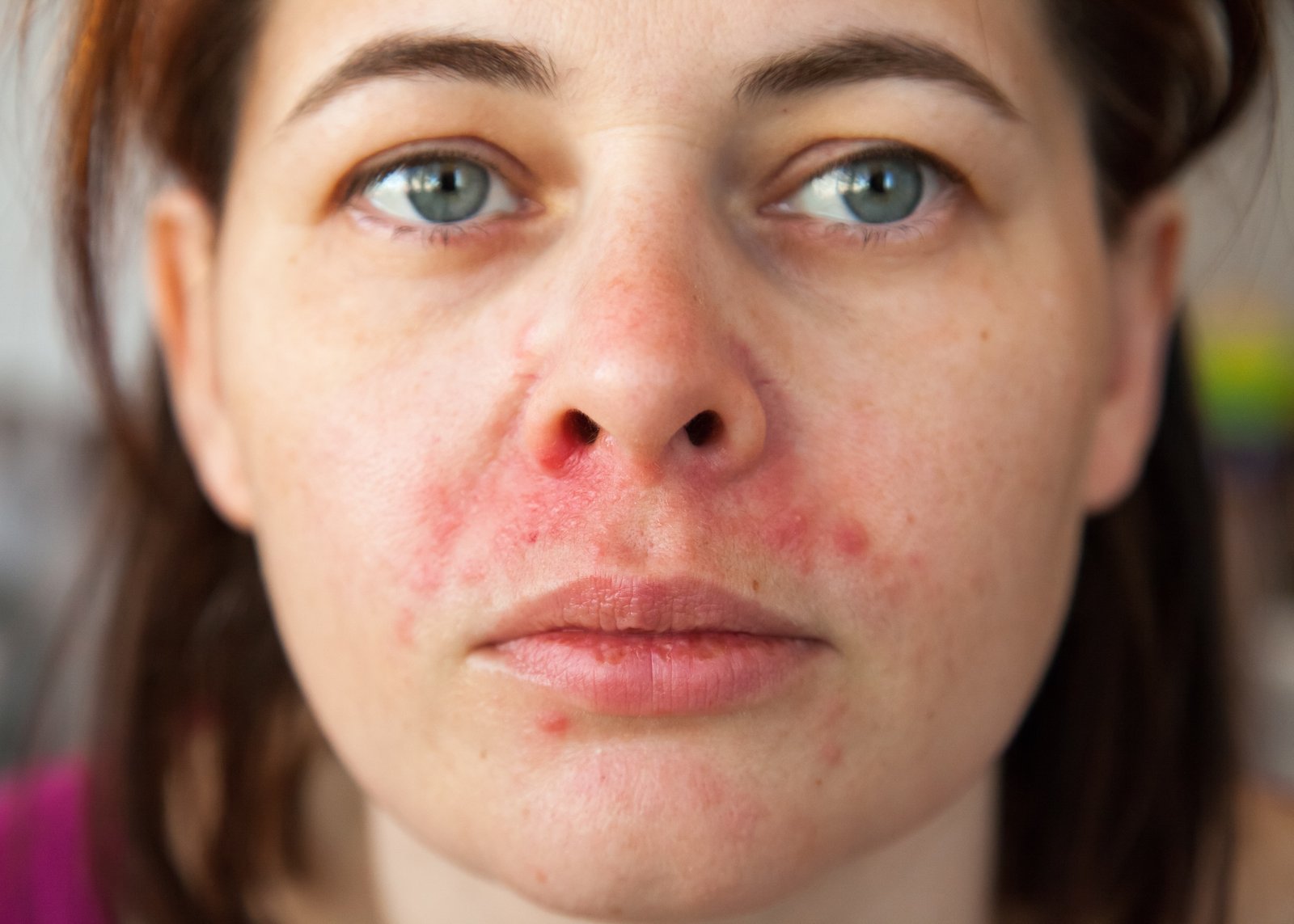
Rosacea runs in cycles — a stretch of calm, then a flare. Most of what tips it over is identifiable, and the list is short enough to work through: sun, heat, stress, alcohol, spicy food, exercise, and certain skin care products. The catch is that your triggers are not the same as anyone else's, which is why finding them beats guessing at them.
The Usual Suspects
Bakersfield Dermatology lists the factors that aggravate rosacea by increasing blood flow to the face:
- Sun exposure and extremes of temperature
- Hot baths and saunas, and very hot foods or drinks
- Alcohol and spicy foods
- Stress, anger or embarrassment
- Vigorous exercise
- Harsh soaps or abrasive cleansers
- Corticosteroids and medications that dilate blood vessels, including some blood pressure medicines
The American Academy of Dermatology's list is close to identical, adding wind and cold, some makeup, and certain hair care products. Its framing is the useful part: common triggers include overheating, alcohol and spicy foods, but what triggers your flare-ups may not cause another person's rosacea to flare.
How to Find Yours
The AAD sets out a three-step process: work through a list of possible triggers, confirm the real ones by tracking, then make changes to avoid them. The tracking step is the one people skip, and it is the one that works.
Keep a record every day for at least two weeks. Note what you ate, what you drank, which personal care products you used, and what you were exposed to — heat, cold, sun, stress. Then note whether your face flushed. The AAD adds a practical tip for people who are not sure: if your cheeks feel warm to the touch, or you feel warm, you may be flushing.
Two weeks is usually enough to see a pattern. Bring the record to your appointment — it turns a vague "my face goes red sometimes" into something specific enough to act on.
The Four That Matter Most
Sun
The AAD calls the sun one of the most frequent causes of a rosacea flare, and notes it can worsen rosacea at any time of year. Its recommendation is a gentle broad-spectrum sunscreen of SPF 30 or higher, every day — choosing a fragrance-free formula containing zinc oxide, titanium dioxide, or both, as those are least likely to irritate sensitive skin.
Heat
Plan around it rather than react to it. The AAD suggests warm baths and showers instead of hot ones, and dressing in layers so you can shed one before you overheat. In Bakersfield that is a summer-long consideration rather than an occasional one.
Exercise
Anything that raises body temperature can set off a flare, exercise included — but the answer is modification, not avoidance. The AAD specifically suggests aqua aerobics or swimming in cool water as ways to limit flares while still training.
Skin and hair care
The AAD advises stopping products that contain menthol, camphor or sodium lauryl sulfate, looking for products labelled for sensitive skin, and avoiding anything that stings, burns or irritates. That last rule is the simplest test you have: if it stings, it is not for your face.
Food and Drink
Hot liquids can cause flushing simply by being hot. Spicy food raises a sweat. Alcohol — the AAD singles out red wine — often induces flare-ups. None of these is on a universal banned list, which is exactly why the diary matters: if red wine reliably flares you and coffee never does, you only need to change one thing.
What Trigger Management Cannot Do
The limitation to be clear about: avoiding triggers reduces how often and how hard you flare. It does not treat the underlying condition. The practice's own page states plainly that rosacea has no cure, and that without treatment it can affect emotional, psychological and physical health. Trigger work sits alongside medical treatment — topical medications, oral antibiotics for bumps and pimples, and laser or intense pulsed light therapy for visible vessels and redness — not instead of it. Treating it early is generally easier than treating it late.
Talk to a Dermatologist in Bakersfield
Bakersfield Dermatology & Skin Cancer Medical Group treats rosacea at 4100 Empire Drive, Suite 120, Bakersfield, CA 93301, with additional offices in Porter Ranch, Valencia and Palmdale. Bring your two-week trigger diary — call 866.903.3376 or request an appointment.
Frequently Asked Questions
How long should I keep a trigger diary?
The American Academy of Dermatology recommends completing a trigger record every day for at least two weeks. You are tracking food, drinks, personal care products and exposures such as heat and cold, alongside whether your face flushed that day.
Is sunscreen really necessary if I stay out of the sun?
Sun is one of the most frequent causes of a flare, and it reaches you on cloudy days and through windows. The AAD recommends a gentle broad-spectrum sunscreen of SPF 30 or higher every day, and notes that fragrance-free formulas containing zinc oxide, titanium dioxide or both are least likely to irritate sensitive skin.
Do I have to give up exercise?
No. Anything that raises body temperature can trigger rosacea, but the answer is adjusting rather than stopping. The AAD suggests options such as swimming or aqua aerobics in cool water to limit flares.
If I avoid all my triggers, will the rosacea go away?
Avoiding triggers reduces how often and how strongly you flare, but the practice's own page is clear that rosacea has no cure. Trigger management works alongside medical treatment, not instead of it.
Sources: American Academy of Dermatology, Triggers Could Be Causing Your Rosacea Flare-Ups — the three-step process, the two-week tracking period, what to record, the common trigger list and the warm-to-the-touch tip; AAD, How to Prevent Rosacea Flare-Ups — sun as a frequent cause, the SPF 30 broad-spectrum and zinc/titanium guidance, heat and layering advice, cool-water exercise, and the menthol/camphor/sodium lauryl sulfate warning; and Bakersfield Dermatology's own Rosacea page — the aggravating-factor list, that rosacea has no cure, and the treatments offered here.