



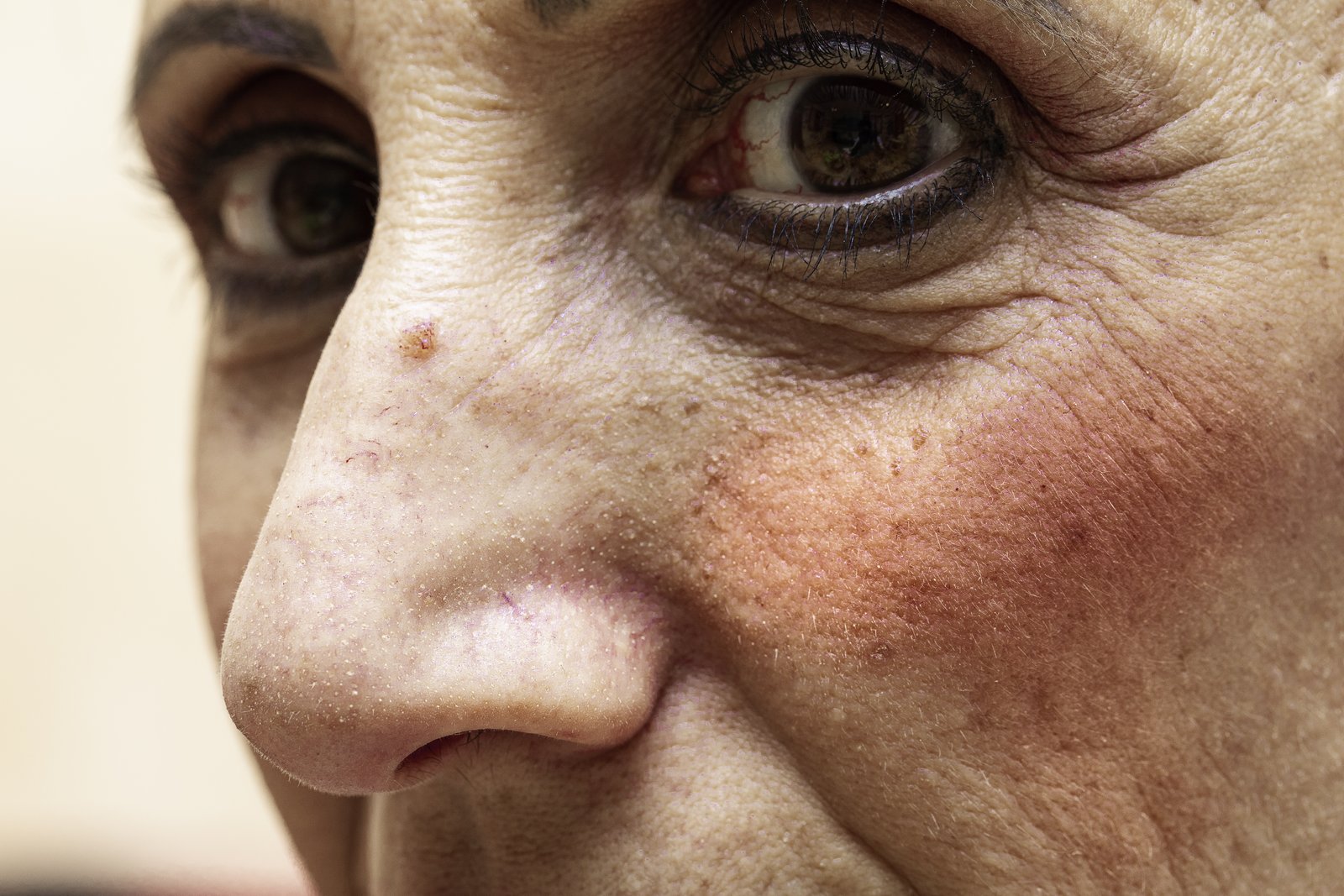
Rosacea does not look the same on everyone, and the differences matter — they change which treatment gets chosen. One person flushes and shows fine visible vessels across the cheeks. Another gets bumps and pimples that look like acne. A third notices the skin of the nose thickening. A fourth has irritated, gritty eyes and no obvious rash at all. All of it is rosacea.
The Features to Recognise
Bakersfield Dermatology lists the signs and symptoms of rosacea as:
- Facial blushing or flushing that comes and goes
- Visible veins on the nose and cheeks
- Swollen bumps or pimples on the face
- Burning or stinging sensations on the skin
- Eye problems such as dryness, irritation or redness
- An enlarged nose from excess tissue (rhinophyma)
Those group into four recognisable patterns, and most treatment decisions follow from which pattern dominates.
| Pattern | What you notice | Commonly used for it |
|---|---|---|
| Flushing and visible vessels | Redness that comes and goes, then persists; fine visible veins on the nose and cheeks; stinging or burning | Topicals that constrict vessels; pulsed dye laser or intense pulsed light |
| Bumps and pimples | Swollen red bumps and pus-filled spots, no blackheads or whiteheads | Topical azelaic acid, metronidazole or ivermectin; oral antibiotics for moderate to severe |
| Thickening skin | Excess tissue, most often on the nose (rhinophyma) | Assessed individually — more common and more severe in men |
| Eye involvement | Dryness, irritation, redness, a gritty feeling | Raise with both your dermatologist and eye doctor |
More than one at a time is normal. Persistent redness with bumps on top of it is a common combination, and it is why plans often pair a topical for the spots with light-based treatment for the background redness.
Rosacea or Acne?
This is the most useful distinction to get right, because the two are treated differently and some acne products make rosacea worse. The practice sets it out directly:
- Age: rosacea usually affects people older than 30; acne is more common in teenagers and young adults.
- Location: rosacea affects only the face and eyes; acne can also affect the chest, neck, back and shoulders.
- Blackheads and whiteheads: rosacea does not cause them. Acne does.
- What sets it off: rosacea is triggered by hot drinks, spicy food, alcohol, temperature extremes, sunlight, wind, emotions, exercise, cosmetics or certain medications. Acne comes from pores clogged by excess oil and dead skin cells.
Who Tends to Get It
The practice describes rosacea as a chronic inflammatory condition affecting more than 16 million Americans, with most people first developing it in their thirties and then living with cycles of flare-up and dormancy. It is most common in fair-skinned people of Northern European descent and more common in women than men — though men tend to experience more severe symptoms, and anyone can develop it. Light skin, a family history and frequent blushing all raise the tendency.
Why the Type Changes the Plan
Treatment is matched to the features you actually have. The practice lists topical drugs that reduce flushing such as brimonidine and oxymetazoline, which work by constricting blood vessels and need regular application; topicals for the pimples such as azelaic acid, metronidazole and ivermectin, which may take several weeks to show improvement; oral antibiotics such as doxycycline for moderate to severe rosacea with bumps; and laser or intense pulsed light therapy for enlarged vessels and redness.
The limitations worth stating: none of these cures rosacea — the practice is explicit that it has no cure, and treatment plus trigger management is how it is controlled. Each option has its own trade-offs: vessel-constricting topicals must be reapplied, the pimple topicals take weeks before anything visibly changes, and laser and light therapies may cause temporary swelling and bruising. Isotretinoin is reserved for severe rosacea that has not responded to other therapies and carries serious considerations including birth defects, which is why it is prescribed with strict precautions.
Get Your Pattern Assessed
Bakersfield Dermatology & Skin Cancer Medical Group treats rosacea at 4100 Empire Drive, Suite 120, Bakersfield, CA 93301, with additional offices in Porter Ranch, Valencia and Palmdale. To find out which pattern you have and what suits it, call 866.903.3376 or request an appointment.
Frequently Asked Questions
Can I have more than one type at once?
Yes, and it is common. Someone may have persistent redness and visible vessels alongside bumps and pimples. That is one reason treatment is often combined — a topical for the bumps and light-based treatment for the redness address different features.
Is rosacea the same as adult acne?
No. The practice sets out the differences: rosacea usually affects people over 30 and is limited to the face and eyes, while acne is more common in teenagers and young adults and can also affect the chest, neck, back and shoulders. Rosacea does not cause blackheads or whiteheads.
Why do my eyes feel gritty?
Rosacea can involve the eyes — the practice lists dryness, irritation and redness among the signs. Eye symptoms can appear before skin symptoms, so mention them at your appointment and tell your eye doctor you have rosacea.
Does everyone with rosacea eventually get a thickened nose?
No. Thickening of the skin, known as rhinophyma, is one possible feature rather than an inevitable stage, and the practice notes men tend to experience more severe symptoms. Your dermatologist can tell you what your own pattern suggests.
Sources: Bakersfield Dermatology's own Rosacea page — the sign and symptom list, the 16 million Americans figure, onset in the thirties, who is most at risk, the full Rosacea vs Acne comparison, the treatment list with its named medications and their caveats, and that rosacea has no cure.