


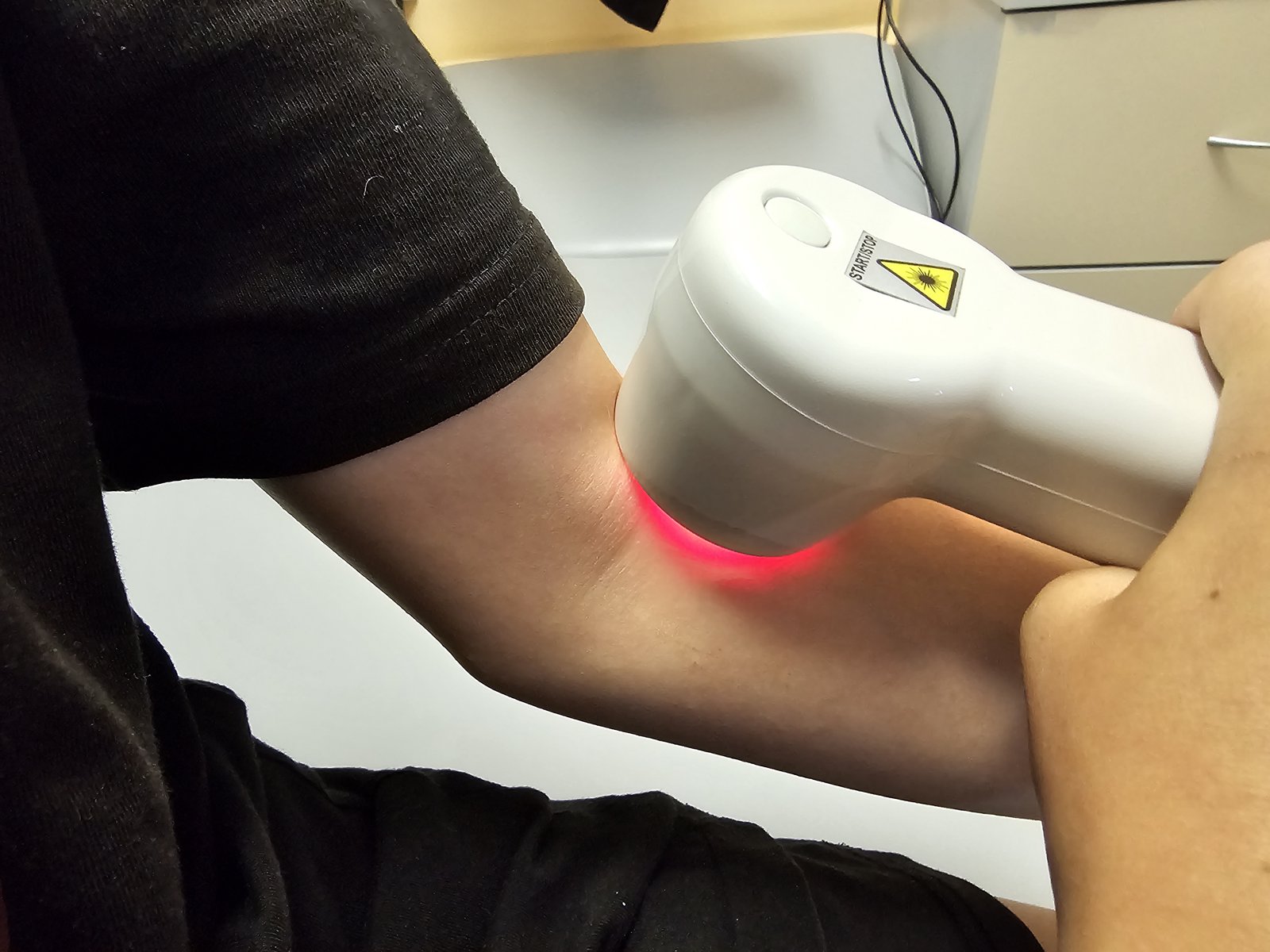
The XTRAC® laser treats psoriasis by aiming targeted UVB light at the plaque itself and leaving the surrounding healthy skin alone. It has FDA approval for mild to severe plaque psoriasis and for vitiligo, it is quick, and the practice reports significant symptom reduction within 10 to 12 sessions. For stubborn patches that topicals have not shifted, it is a different kind of option — no creams, no daily routine.
How Targeted Phototherapy Works
Ultraviolet light has been used against psoriasis for decades. What changed is the aim. Bakersfield Dermatology describes the XTRAC system directing a calibrated beam of UVB laser light through a liquid light guide, which lets the operator pinpoint it on active lesions and deliver a high therapeutic dose without exposing the healthy skin around them.
At the cellular level, the practice explains, the light targets the DNA of the T cells within psoriatic plaques, slowing their growth and helping the plaques clear. That connects directly to what psoriasis is — the practice's psoriasis page describes T cells attacking healthy skin as if fighting an infection, driving skin cells to the surface far faster than they can shed.
Why "targeted" is the important word: whole-body phototherapy exposes all your skin to reach the affected parts. A targeted device concentrates the dose on the plaque, which is what makes a higher dose practical and keeps unaffected skin out of it.
What Treatment Involves
Sessions are short and the practice describes the process as quick and well tolerated, with minimal downtime and no messy creams or daily skincare routine attached. On frequency, the American Academy of Dermatology notes that most phototherapy patients need two or three treatments a week over several weeks, with some cases requiring five weekly sessions.
The practice's figure for results is 10 to 12 treatment sessions for significant reduction in psoriasis symptoms, and it describes the relief as typically long-lasting — often several months free of symptoms.
Where It Fits
The AAD notes the excimer laser — the class of targeted narrowband UVB device XTRAC belongs to — can safely treat children and adults with psoriasis on the scalp, ears, armpits, groin or buttocks, as well as elbows and knees, and that research supports its use for small areas of stubborn, thick plaque psoriasis and for nail psoriasis.
The practice frames it as an alternative for people who would rather not use other psoriasis medications, cannot tolerate their side effects, or have stubborn areas that have not responded to topical therapy. If your psoriasis is on the scalp, that is one of the sites it handles.
The Limits and the Risks
This is treatment, not cure. Psoriasis is chronic — the practice is clear that anyone with the condition lives with a cycle of flare-ups and remissions over a lifetime. XTRAC can clear plaques and buy months of relief; it does not remove the underlying condition, and further courses are typically needed over time.
Phototherapy also carries real risks that belong in the decision. The AAD lists immediate effects including a sunburn-like reaction with red or tender skin, mild stinging or burning, and dark spots on the skin. Over the longer term it lists freckles, early skin ageing — age spots, wrinkles, loose skin — and an increased risk of developing skin cancer. That is precisely why phototherapy is prescribed, dosed and monitored by a dermatologist rather than run open-endedly, and why targeting only the plaque rather than the whole body is an advantage worth having.
On cost, the practice notes that most major insurance companies cover XTRAC treatment and that it is available by prescription, and recommends checking with your insurance provider before scheduling.
Also Used for Vitiligo
The same device is used for vitiligo, where the goal is the opposite: rather than slowing cells down, the light stimulates melanocytes — the pigment-producing cells — in areas that have lost colour, promoting repigmentation. The practice notes results vary from person to person, with many patients experiencing significant repigmentation after a series of treatments.
Ask About XTRAC in Bakersfield
Bakersfield Dermatology & Skin Cancer Medical Group offers XTRAC laser treatment at 4100 Empire Drive, Suite 120, Bakersfield, CA 93301, with additional offices in Porter Ranch, Valencia and Palmdale. To find out whether your plaques are suitable, call 866.903.3376 or request an appointment.
Frequently Asked Questions
How many XTRAC sessions will I need?
Bakersfield Dermatology's page describes significant reduction in psoriasis symptoms within 10 to 12 treatment sessions. The American Academy of Dermatology notes most phototherapy patients attend two or three treatments a week over several weeks.
Is it covered by insurance?
The practice notes that most major insurance companies cover XTRAC treatment and that it is available by prescription, and recommends checking with your insurance provider before scheduling.
How long does the improvement last?
The practice describes the relief as typically long-lasting, often giving psoriasis patients several months free of symptoms. Psoriasis is a chronic condition, so treatment manages flares rather than ending them.
Does it treat anything besides psoriasis?
Yes. The practice's page covers vitiligo as well — for vitiligo the laser stimulates the pigment-producing cells in areas that have lost colour, promoting repigmentation, though results vary from person to person.
Sources: American Academy of Dermatology, Psoriasis Treatment: Phototherapy — that the excimer laser safely treats children and adults with psoriasis on the scalp, ears, armpits, groin or buttocks as well as elbows and knees, its use for stubborn thick plaques and nail psoriasis, the two-to-three treatments a week schedule, and the immediate and long-term side effects including increased skin cancer risk; and Bakersfield Dermatology's own XTRAC Laser and Psoriasis pages — FDA approval for plaque psoriasis and vitiligo, the liquid light guide delivery and T-cell mechanism, the 10-to-12 session figure, long-lasting relief, insurance coverage, the vitiligo repigmentation use, and the chronic flare-and-remission course.